
As finals week approaches, one question dominates every student’s mind: “What grade do I need on my final exam?” Whether you’re in high school, college, or university, understanding how to calculate your final grade is essential for academic success and can significantly reduce grade anxiety. This comprehensive guide will walk you through everything you need to know about grade calculation, from basic formulas to advanced weighted grading systems.
Understanding Your Current Grade
Before you can determine your final course grade, you need to know your current standing in the class. Check your gradebook regularly to track your student performance across all grading categories. Most courses include various assignment types such as homework, quizzes, tests, classwork, projects, essays, and midterms. Your instructor or professor typically outlines the grade distribution in the syllabus at the beginning of each semester or marking period.
Your current grade represents your course grade entering the final, which serves as the foundation for calculating what you’ll need on your final exam. Make sure to account for any missing assignments, unsubmitted assignments, or zeros in gradebook that might be dragging down your overall grade. Some teachers offer extra credit or bonus assignments, while others may drop the lowest grade dropped from certain categories, so verify these class requirements before making your calculations.
The Basic Formula for Calculating Grades
The final grade formula depends on whether your course uses a points based system or a weighted grading system. In a points based approach, you simply add totals together, divide your total points earned by the maximum points or points possible, then multiply by 100 to get your percentage grade.
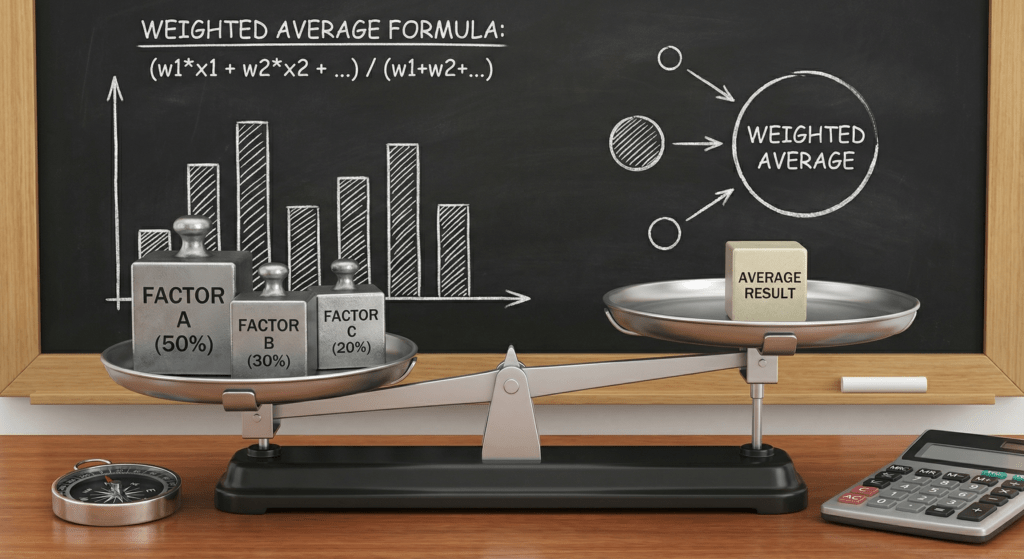
For a weighted average calculation, the process requires more steps. First, you need to convert weight to decimal by dividing each category’s percentage by 100. Then, multiply by weight for each grading category to get the contribution of that category to your overall grade. Finally, you sum of weights to determine your cumulative grade. This weighted average formula is commonly used in college courses where different assessments carry different levels of importance for evaluation and assessment of coursework.
Calculating Your Required Final Score
To determine the minimum score needed on your final exam, you’ll need to know three key pieces of information, your desired grade or target grade, your grade before final exam, and the final exam weight or weight of final as a percentage of your total course grade.
The grade calculation formula works like this, subtract your current weighted grade from your target course grade, then divide by the final weight percentage in decimal form. For example, if you want a 90% (A) in the class, currently have an 85%, and your final is worth 20% of your grade, you’d calculate: (90, 85×0.80) ÷ 0.20 = 110. This tells you that achieving your goal grade is mathematically impossible without extra credit, so you’d need to adjust your academic goals accordingly.
Understanding what grade do I need scenarios helps you plan effectively. A final grade calculator can simplify this process by allowing you to enter grades and numerical inputs quickly, providing accurate calculations with proper decimal places and rounding rules. These online calculator tools help with time management during the stressful end of semester period, both before final exam and after final exam when you’re evaluating your performance.
Working with Different Grading Systems
Understanding your institution’s grading scale is crucial for proper grade determination and grade computation. Most schools use letter grades (A, B, C, D, F) that correspond to specific percentage ranges and grade equivalents. For instance, an A might represent 90 to 100%, B is 80 to 89%, and so on. Some courses use grade points that contribute to your GPA (grade point average), which is particularly important for college students monitoring their academic standing.
Weighted vs. unweighted systems can significantly impact your semester grade, term grade, and quarter grade calculations across different grading periods. In a weighted grade system, honors or AP courses might receive additional points, affecting your overall GPA differently than regular courses. Understanding these nuances helps with grade tracking throughout your academic career and ensures you meet class requirements for advancement.
Letter grade conversion and percentage conversion are mathematical operations you’ll use frequently. When you divide by total points and apply the grading scale, you transform raw scores into meaningful letter grades that reflect your student performance in each class grade category.
Practical Tips for Grade Improvement
Once you’ve calculated the required score or score needed on final, it’s time for study planning and study time allocation. If the calculation shows you need an unrealistic score, focus on strategies for grade improvement in other areas. Talk to your teacher about opportunities for makeup work, review policies about excused grades, and ensure all coursework is submitted on time to avoid additional zeros in your gradebook.
For better assessment preparation approaching finals, break down your study sessions by category weights. If tests are worth more than homework in your class, prioritize reviewing test material. Consider how different assignment weights affect your class grade and adjust your effort accordingly to reach your passing grade threshold or target course grade.
Understanding how to calculate grades throughout the grading period, not just before finals, gives you better control over your educational outcomes. Regular grade computation helps you identify problems early when there’s still time to calculate your standing and address them. This proactive approach to grade tracking reduces stress and improves your chances of achieving your desired grade.
Using Technology for Grade Calculation
Modern grade calculator tools make mathematical operations much simpler than manual calculations. A quality weighted grade calculator handles the complex multiply by weight and divide by total operations automatically, reducing errors and saving time. When you use calculator input features to enter your information, these tools provide precise results that help with accurate calculations for your final course grade across all grade categories.
The best calculator tools also allow you to model different scenarios, answering questions like “what grade do I need if I score X on the final?” This helps with stress reduction by giving you clear, actionable targets rather than vague anxieties about your passing grade. You can test various scenarios to understand exactly how your course percentage will change based on different final exam grade outcomes.
Planning for Academic Success
Understanding grade evaluation isn’t just about surviving finals week. It’s about developing skills for long term academic success and stress reduction. Knowing your course percentage at any point during the quarter grade or marking period empowers you to make informed decisions about study time allocation and prioritization of your academic goals.
Whether you’re trying to maintain a specific letter grade conversion for scholarship requirements or simply want to understand your grade equivalents across different courses, mastering these calculation skills serves you throughout your educational journey at any university or college. The ability to calculate your standing helps transform grade anxiety into actionable study plans that improve both your grades and your confidence.
According to research from the National Center for Education Statistics, students who regularly monitor their grades and understand grading systems tend to perform better academically. This awareness allows for better time management and helps students identify when they need additional support from their instructor or professor.
Conclusion
Calculating your final grade doesn’t have to be intimidating. By understanding the formula for calculating grades, knowing your assignment types and category weights, and using reliable tools, you can approach finals with confidence and clarity. Remember to check your gradebook regularly, understand your syllabus requirements and class requirements, and communicate with your instructor about any concerns regarding your current standing or final course grade.
Whether you’re aiming for a specific percentage grade, working toward college admission requirements, or simply trying to pass, these calculation skills put you in control of your academic destiny. Start tracking your grades early in each term grade period, plan strategically for each grading period, and use the available resources to achieve your target course grade. Understanding how points earned relate to points possible and how to work with both weighted and unweighted grading systems will serve you well throughout your educational career.
With proper grade determination techniques and consistent monitoring of your semester grade progress, you’ll never be surprised by your final results. Take control of your academic success today by mastering these essential grade calculation skills.